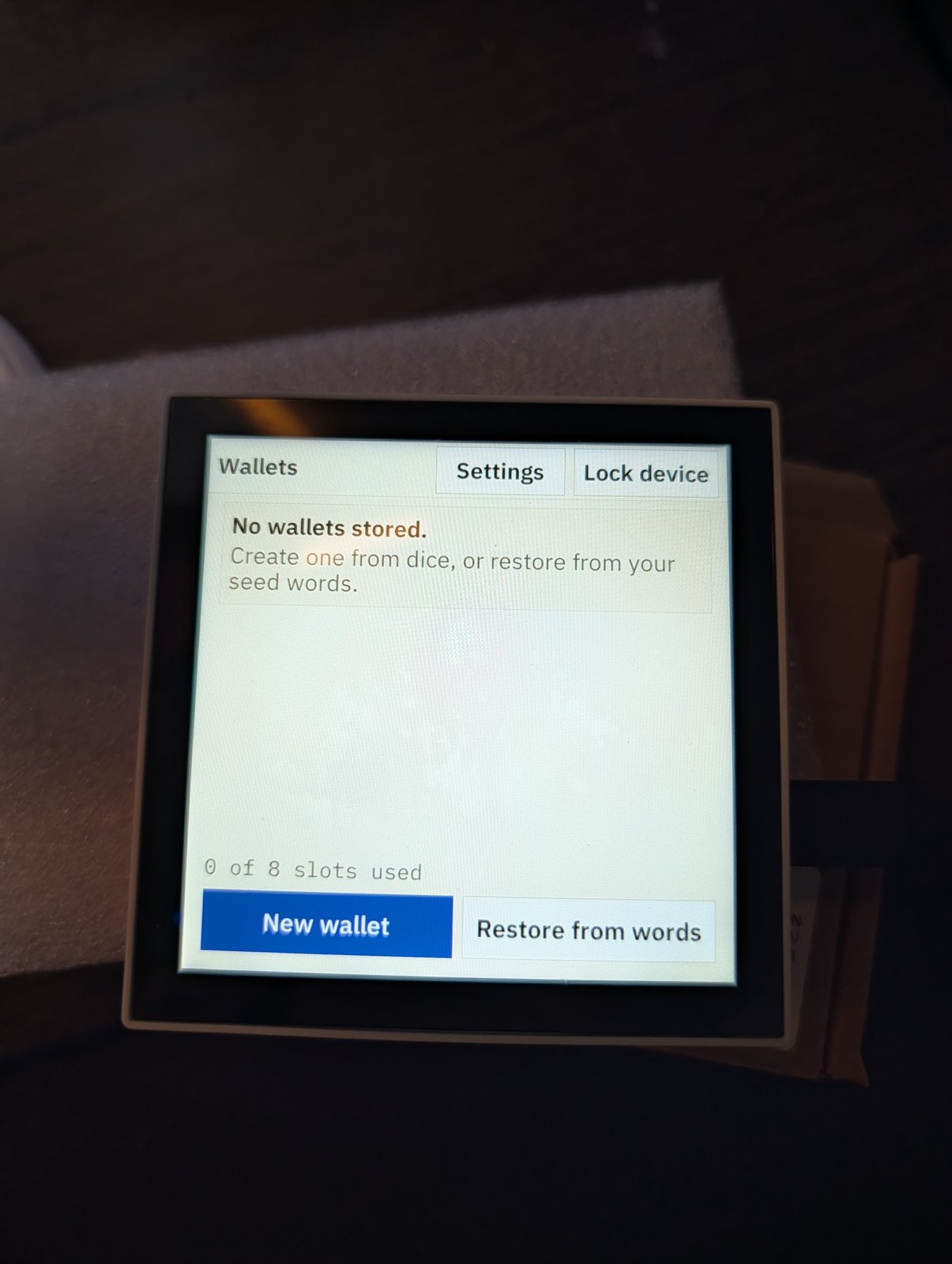
Both projects came out of the Coldcard hack. People spent $150-400 on what was supposed to be the best hardware wallet, then firmware bugs made those devices not secure. The goal: low cost, secure, offline device that anyone can flash themselves, a quarter of the cost, and with code you can read or modify as you please.
BigDice was named randomly as it is focused on dice BIP39 mnemonic generation and sounded good. notyas means ’not yasmarang’ the favorite pseudo-random-number generator of coinkite company and coldcard wallet firmware developers.
There are many ways to generate a seed phrase from dice, nothing in BigDice or notyas is unique or groundbreaking. They do serve a purpose allowing users to generate seed phrases or sign transactions in offline environments with cheap hardware. They are both a.i. generated tools that cost some in tokens and time to developi. They are both open-source so you can inspect, use, or modify how you please.
BigDice
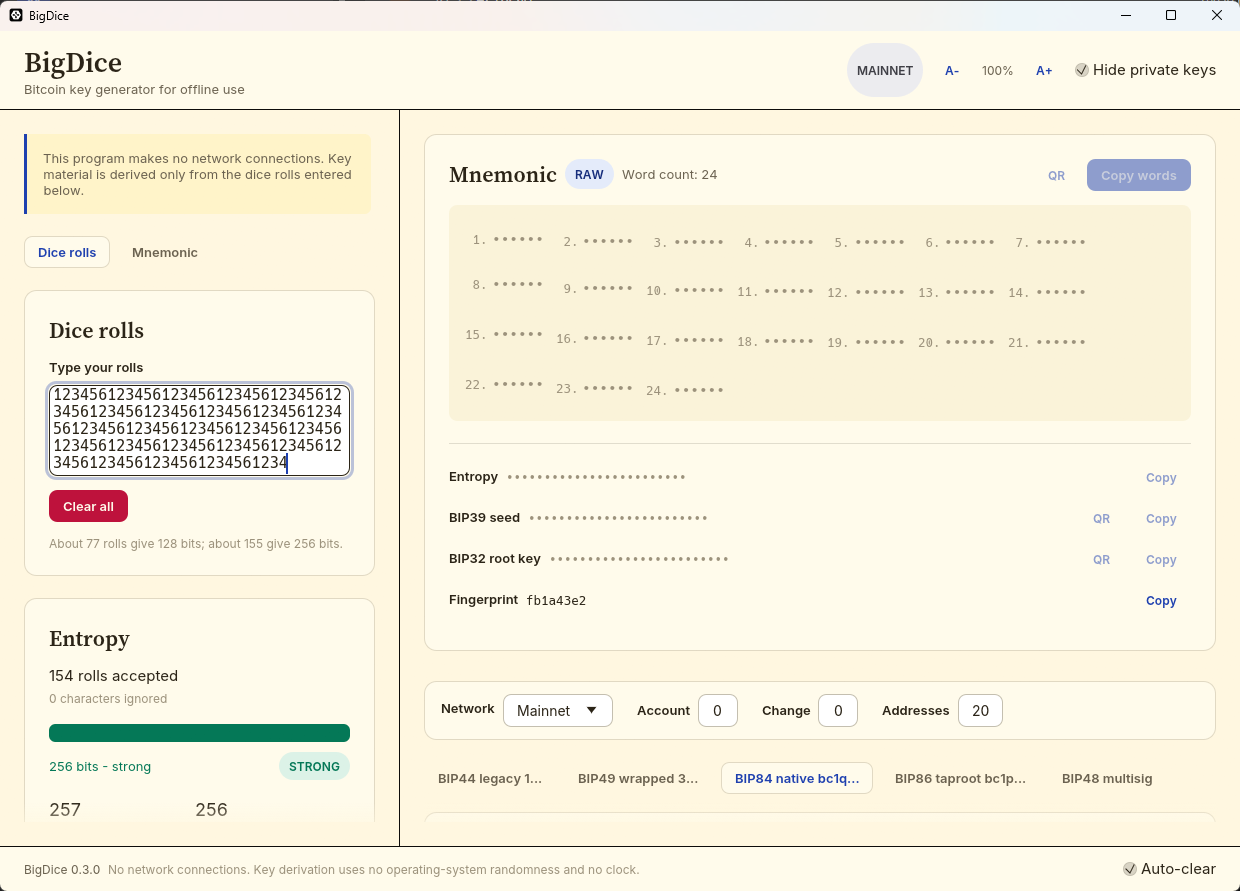
BigDice is a standalone Windows .exe. Roll dice, type them in, get a BIP39 phrase plus addresses in all four common styles (BIP44, BIP49, BIP84, BIP86) with QR codes. Same rolls, same wallet, so you can verify by repeating. It never touches the network. Run it on an old machine with the wireless pulled.
Code: https://git.intnsity.com/intnsity/BigDice
notyas
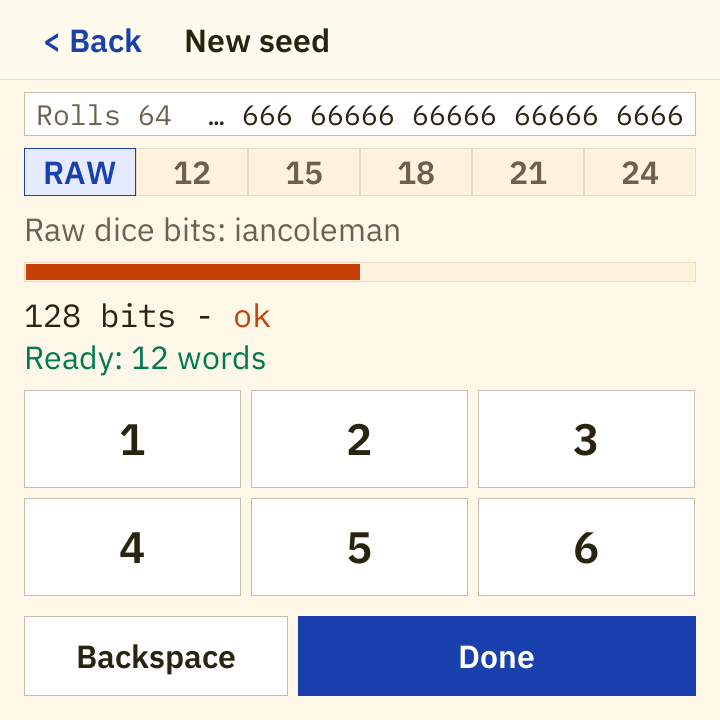
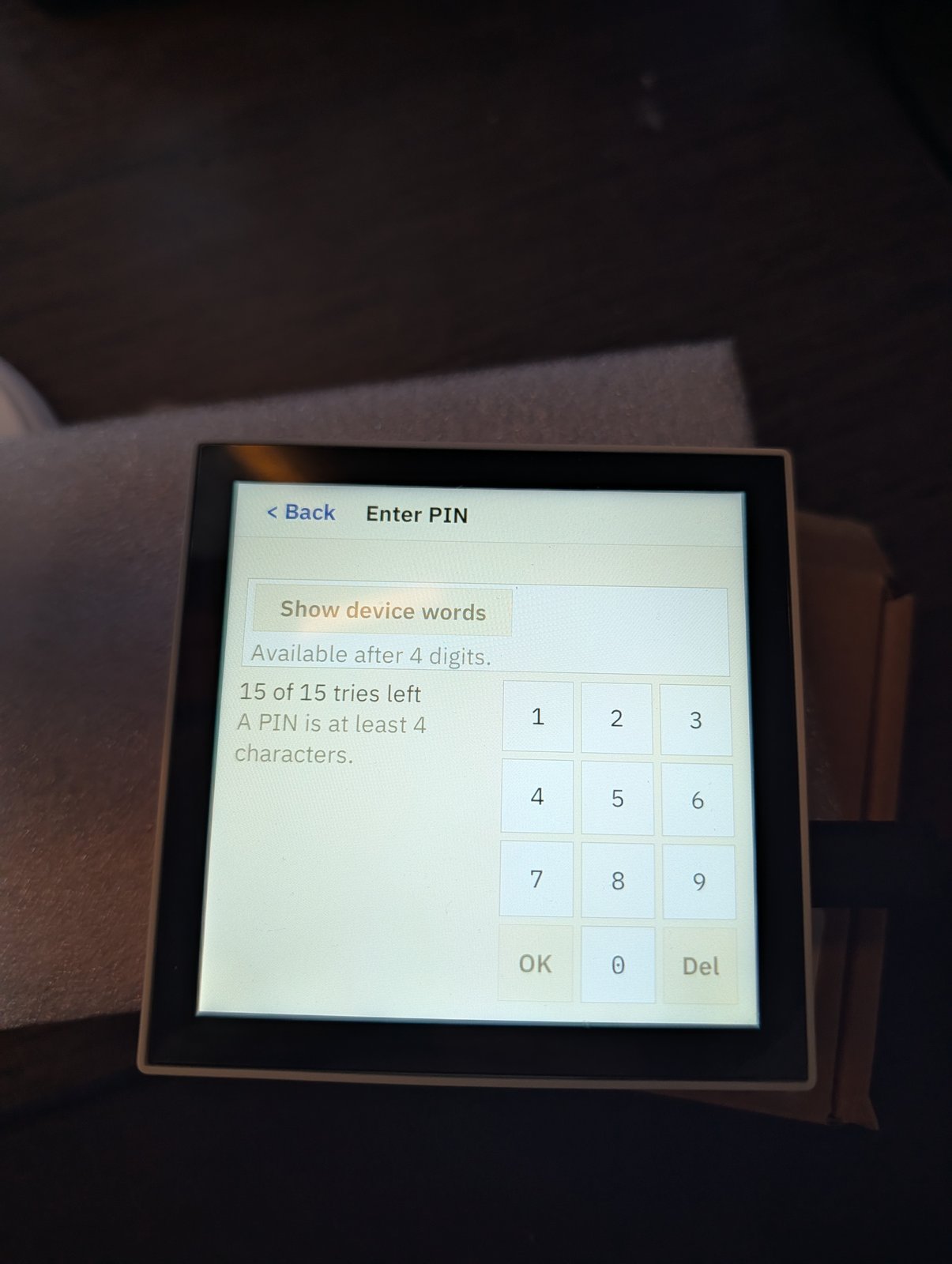
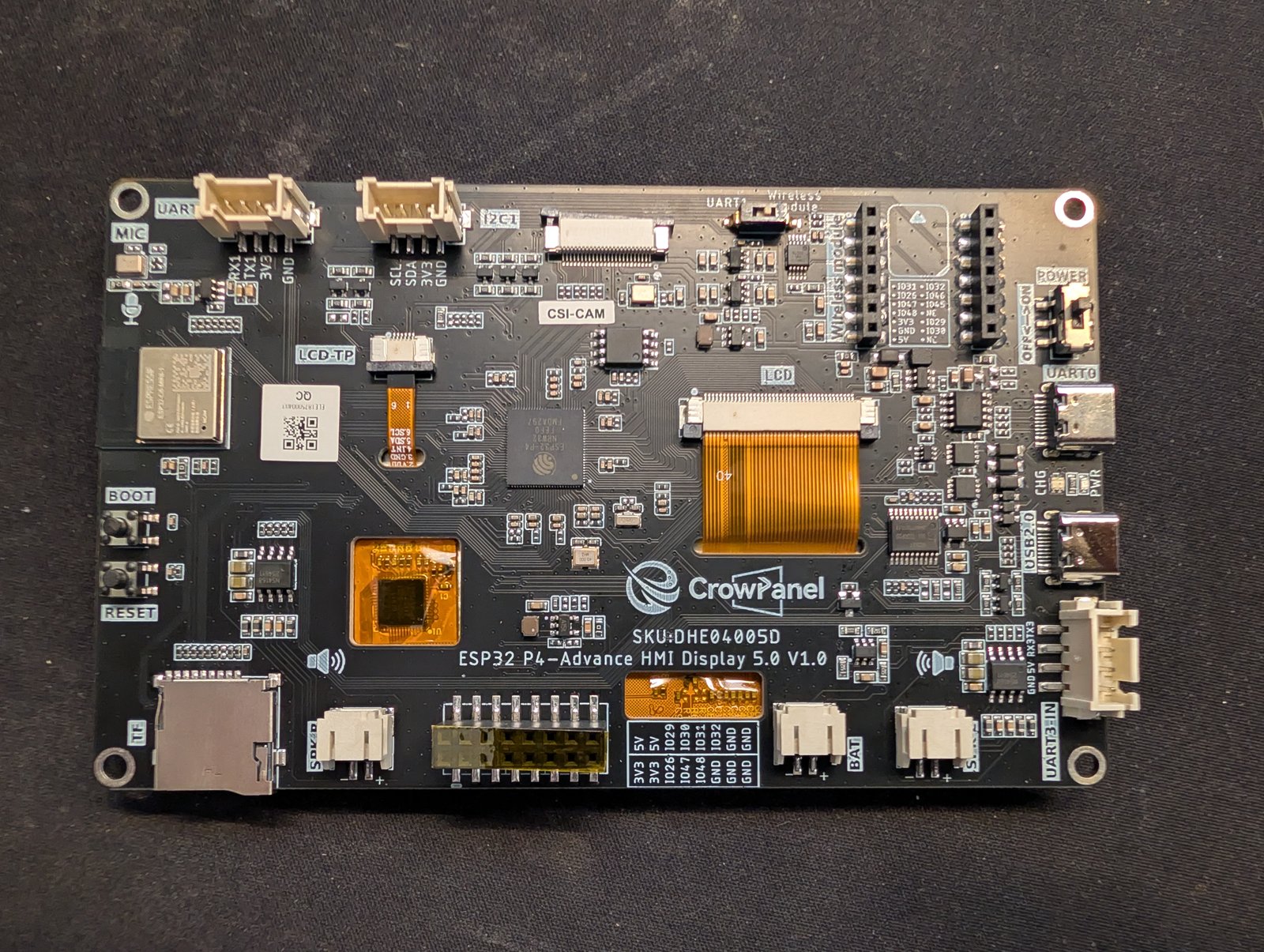
notyas started as “BigDice on an ESP32” and grew. It runs on ESP32-P4 touch panels as a stateless seed generator, or as a wallet manager and transaction signer. Dice rolls or typed words, PIN, wallets saved to flash, PSBTs on microSD, multisig up to 15 cosigners. No radio, no network stack, no USB data path. Similar to SeedSigner. A Raspberry Pi Zero v1.3 is probably a better offline device than the ESP32 boards I have.
I built it on a Waveshare 4B and an Elecrow 5 inch touch panel, $50-60 each at the time. A smaller device is on the way, the waveshare esp32-s3 2 inch at $25USD with touchscreen and included camera. Working on raspi camera and Arducam support (currently working on waveshare), plus a couple of 3d printed case designs to share.
Code: https://git.intnsity.com/intnsity/notyas
Signing on mainnet
I’ve signed real transactions. Single-sig, mainnet, money back and forth, from a wallet generated with dice on the device itself. PSBT on the card, review page by page, hold to sign, generated signed qr code and scanned qr in hot wallet to broadcast transaction.
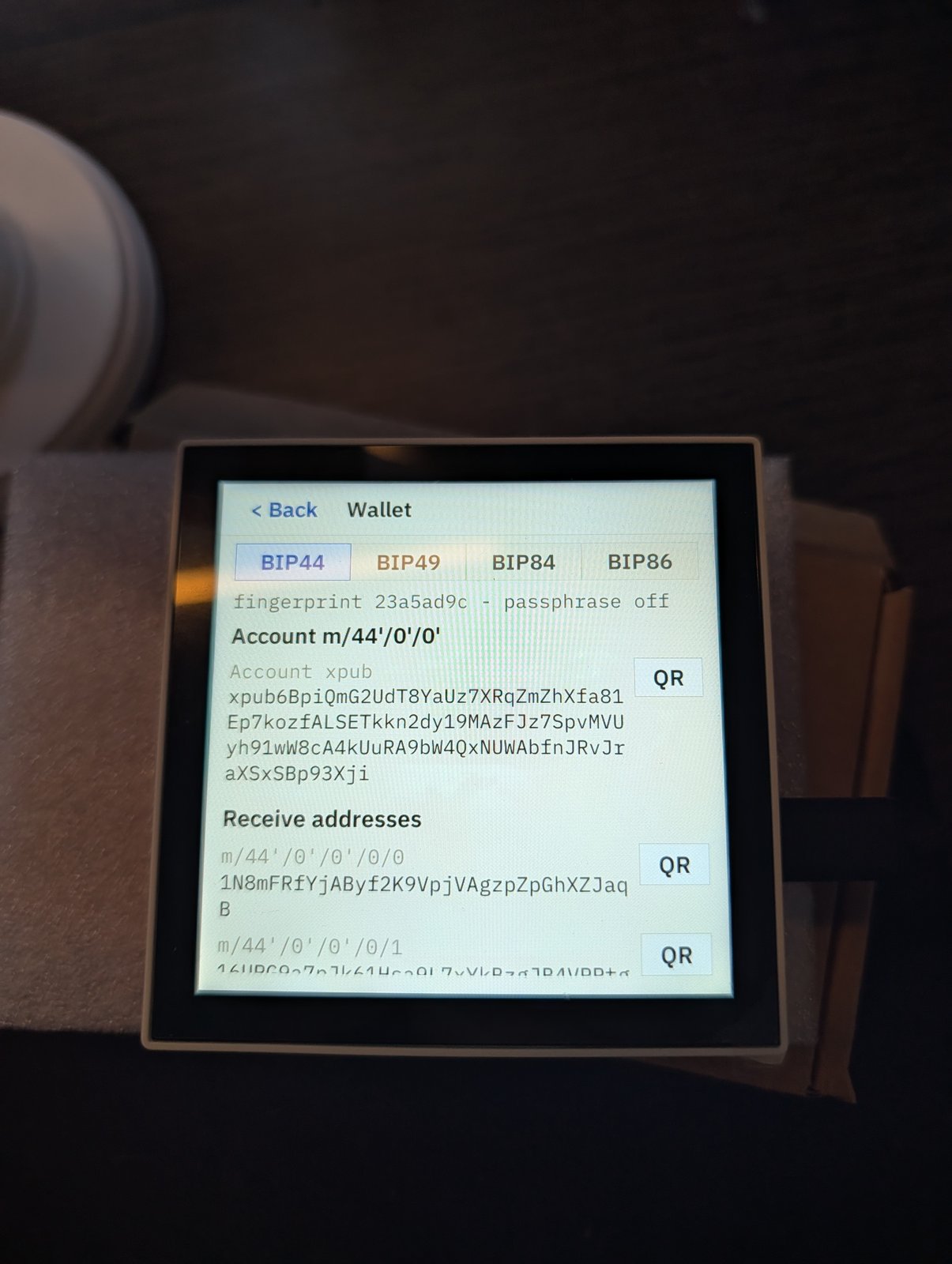
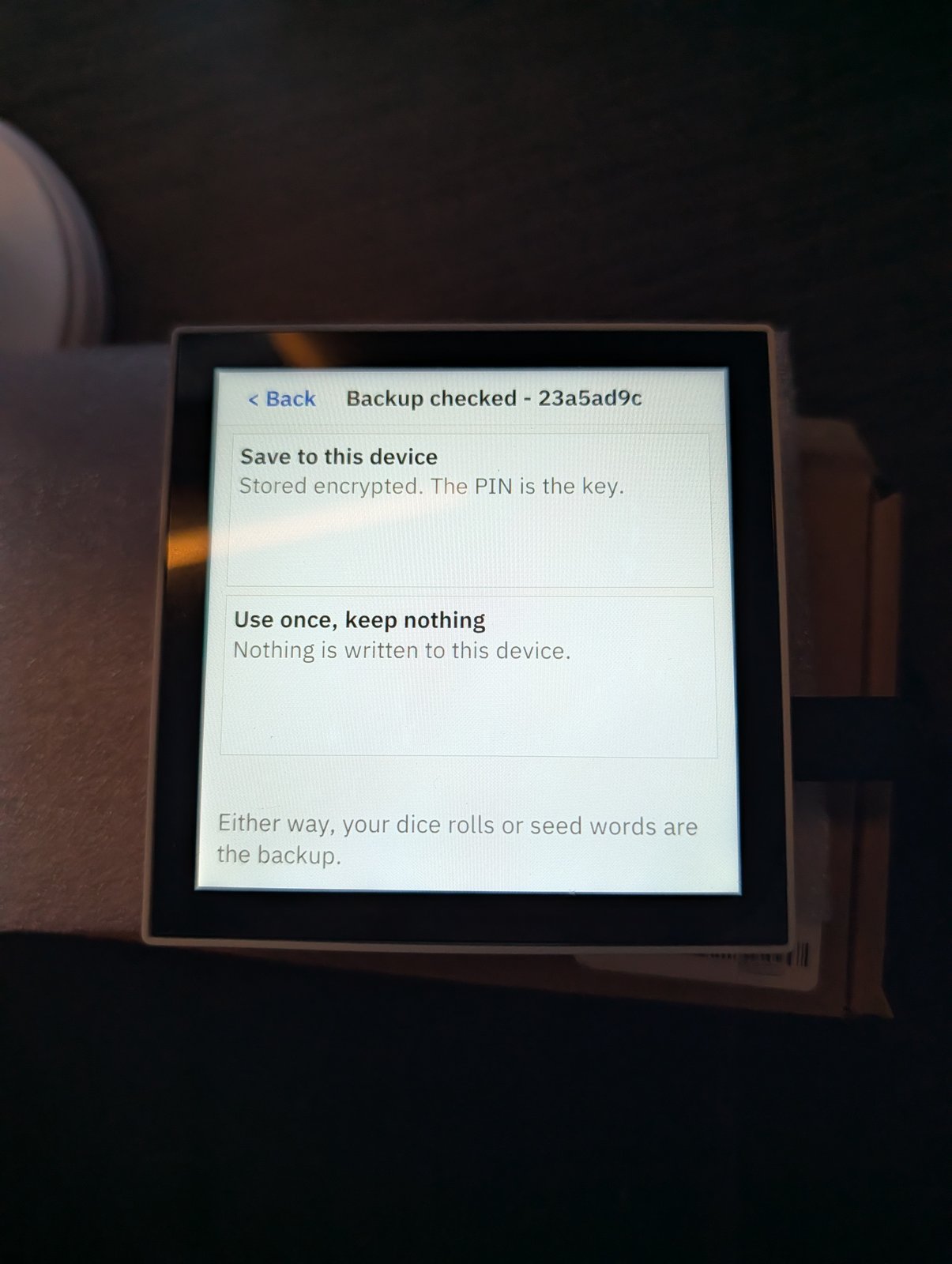
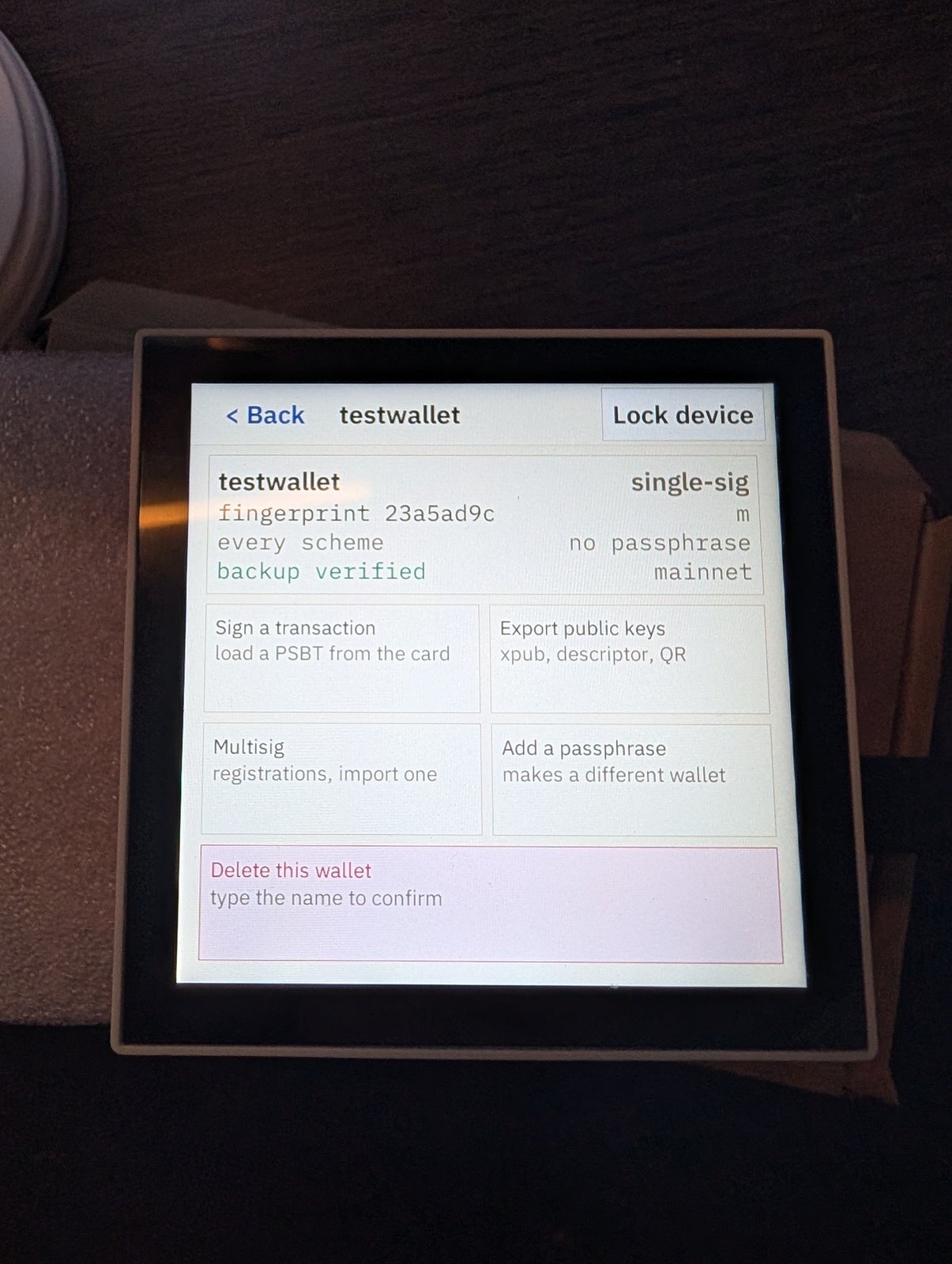
There is a ‘use once, write nothing’ mode for the wallet. For this your seed phrase or dice rolls are your backup.
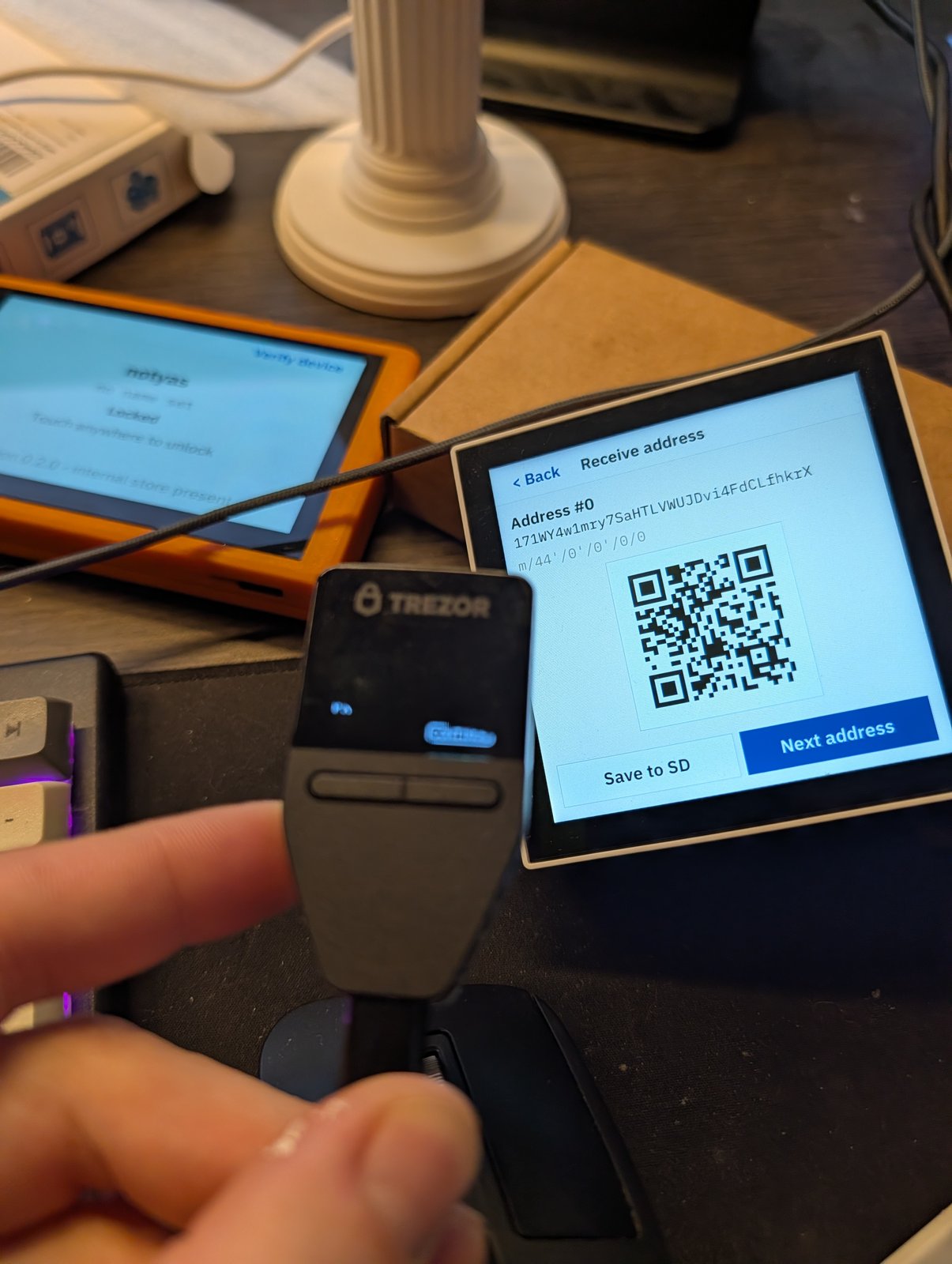
Next to a Trezor Model T for size.
How it was built
I wrote these with Opus 4.8 and Opus 5 on a subscription, and had GLM 5.2 review the codebase a few times. The plan is to keep having frontier models review it, especially the wallet management and signing paths.
Do not take risks with these tools, use your own utilities or skill to inspect the code and only test BigDice or notyas with small amounts of funds. Always write down and backup seed phrases, passphrases, or derivation paths made with BigDice or notyas in case of device failure.
What’s next
More seed sources than dice, maybe. More attack review on signing and storage with diversity of frontier models. Camera support. The $25 device. Case designs.
I don’t know how much time I’ll put into these going forward, but the code is out under GPL-3.0, the hardware is cheap, and you can flash it yourself. If you build one or find improvements i want to hear about it.